


Morris Perio

Periodontal Charting

A Periodontal Chart is also referred to as a gum chart. It is a graphic chart dental professionals use for organizing the information about your gums. Periodontal charting is the best way to uncover the difference between patients that are periodontally healthy and those with periodontal disease.

'peridontal charting'

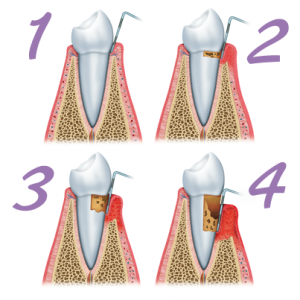
The area between your gum and tooth is known as the “pocket”. Periodontal charting is simple and relatively painless, during the procedure you will hear your dentist or hygienist call out a series of numbers for each tooth. This is measuring, in millimeters, the cuff of your gum line and the point at which the gum actually attaches to your tooth.

Healthy gums have pockets that are usually 2-3mm, anything over 5mm means the bone that supports your tooth is being degraded by periodontal disease. Bleeding is also a sign of gingivitis and gum disease, as healthy gums do not tend to bleed.

Know Your Periodontal Measurements:

0-3mm without bleeding: Great! No problems and you’re doing great with your oral health!

1-3mm with bleeding: Signs of gingivitis. Improved at-home oral care as well as further professional cleanings are in order.

3-5mm with no bleeding:This means there is the potential for gum disease. A routine cleaning cannot go below 3mm, so further in-depth visits to the dentist will be needed.

3-5mm with bleeding: Early stages of gum disease, the beginnings of Periodontitis. This may require additional treatment, better home care and three to four visits to the dentist per year.

5-7mm with bleeding: This means soft and hard tissue damage, as well as bone loss. Definitive treatment is required, over several visits, greatly improved home care and many more hygiene visits to prevent tooth loss.

7mm and above with bleeding: It’s the advanced stage of periodontal disease so aggressive treatment is needed. Surgery will probably be needed to repair the bone loss. Periodontal maintenance is definitely required very frequently.

Periodontal charting is a very thorough process and can greatly improve your chances of keeping all your teeth! Is it time to see your Periodontist? Call Morris Periodontics today on 816-554-2663 to discuss your options!

Dental Implant Success

What do you use your teeth for? Eating, drinking, speaking, laughing, the list goes on! How are these affected when you have tooth loss?

'dental implant in between teeth'

If you have missing teeth, you could be missing a lot! A very reliable and safe method for replacing teeth is dental implants.

Dental implants permanently attach prosthetic teeth to small posts or “roots” that are embedded in the jaw. These posts are made of titanium, and securely fuse to the jaw bone, this helps restore the full functionality of previously missing teeth.

Dental implants not only effectively and reliably replace missing teeth, but also help prevent the loss of jawbone density, restore the support of facial structures, and provide you with the support you need to effectively use your teeth.

The procedure for dental implants can be a quick and easy, and in some cases, can be done in a single day. Your implants become part of you, so they eliminate the discomfort of removable dentures. They also prevent the embarrassment of removing dentures at every snack or meal, as well as the need for denture adhesives.

Sliding dentures can make chewing difficult. Dental implants function like your own teeth, allowing you to eat your favorite foods with confidence and without pain. Nearby teeth are not altered in order to support a dental implant, thus more of your own teeth are left intact, improving oral health in the long-term as well as your oral hygiene.

Dental implants are very durable, lasting several years, and if they are in good care, can last a lifetime.

Don’t miss out with missing teeth, get your smile back and feel better about yourself!

Here at Morris Periodontics we specialize in dental implants, so give us a call today on 816-554-2663 to discuss your future implant success!

10 Tips for Preventing Gum Disease

Gum disease can be serious business if left untreated. The good news is, with regular maintenance and good oral hygiene, you can avoid and even reverse the early stages of gum disease. We’ve put together some tips for you that will help you prevent gum disease.

Maintaining a Clean Mouth

Brushing your gums, as well as your teeth after every meal is the best way to take care of your teeth. Remove those food particles without being too hard on your enamel. We can show you the best method at your next appointment. 

Dental floss can reach those spaces in your mouth that a tooth brush just can’t get to. Get in between your teeth with floss before you brush, so that any food you pull out can be picked up by your tooth brush.

While you shouldn’t rely on mouthwash alone, certain mouthwash products are great for killing bacteria. Consult our office for suggestions as some products are better than others.

'preventing gum disease'

Practice Good Overall Health

Keeping a balanced diet keeps your whole body healthy. Staying away from eating too much sugar is a great place to start. Making sure you get all the nutrients you need helps your body fight bacteria, including those that can cause gum disease.

If you are a smoker, quit! Smoking is not just awful for your lungs, smoking leads to tooth decay, tooth loss and poor gum health. Smoking leads to the creation of pockets in your gums, where bacteria collect and form tartar. It also degrades the tissues that hold your teeth in place.

Talk to Your Doctor about your Medications

It may be worth talking with your doctor about the side effects of any medication you may be on. Some drugs lead to bacteria build up in the mouth, or affect the flow of saliva that keeps that bacteria from settling.

Hormones can also play a role in oral health. If you are experiencing hormonal changes, you may be experiencing tooth sensitivity, and promoting the development of gum disease.

Stress

Stress affects your body’s ability to fight infection. Evaluating the stress in your life and what you can do to manage it is a great idea to promote your general health.

Appointments

Regular oral health visits are the best way to pin down gum disease. The professionals at our office are trained to notice the kinds of things you may not see in your mouth.

You may not have considered that your crooked teeth put you at risk for gum disease. Having straight teeth means eliminating certain pockets where gum disease can develop. Braces are a great way to do this.

Contact our office today to set up your next appointment!

Lasers for Healthy Gums!

The first laser was developed in 1960, based on concepts developed by Albert Einstein many decades before. Shortly after the arrival of the first laser, dental researchers began to investigate how lasers may be used to aid dentists in their work. By the mid 1990s, the first dental lasers were released.

Lasers in Periodontics

For periodontal care, lasers are proving themselves to be less invasive tools for accomplishing (in most cases) the same mission: the cleaning of tissue and roots under the gums to avoid or treat gum disease. Traditionally, (and in some cases we still perform this method), we used hand tools to scrape calculus and plaque out of the gum line and around the tooth root. The advent of lasers, however, has allowed us to treat many of our patients in a less invasive way than what we have done in the past.

'laser therapy'

Lasers have several benefits over traditional root scaling and other periodontal surgeries:

  • Generally speaking, anesthesia isn’t required as the procedure is less painful, particularly when excising diseased gum tissue.
  • Healing time is usually shorter because of the less-invasive nature of the process.
  • Pain and bleeding is also less when lasers are used.
  • And, finally, lasers are very good at targeting diseased areas with precision, and therefore saving adjacent tissue from trauma.

Cost Considerations

The cost of the treatment is totally dependent on the extent of your gum therapy needs. However, it is worth pointing out that sometimes the laser procedures are less expensive than traditional periodontal surgery. This is due to the fact that fewer visits are required.

In short, if you’ve been told that you need to have extensive periodontal treatment and long-term care, you may benefit by starting with our laser process, right here in our office. Give us a call to find out if you are a good candidate for laser periodontal therapy!


Going Green: Dark Green Vegetables and Dental Health

Everyone is going green, but did you know that “going green” can also benefit your oral health? Your pH levels inside your body can greatly affect your overall health. Too much acid in your system can make various parts of your body inflamed. This may include your gum tissues. Gingivitis (early gum disease) and periodontitis (advanced gum disease) are conditions of infection and inflammation. Aiming to consume a balanced diet with the goal of achieving an acidic-alkaline balance (balanced pH level) has been shown to reduce symptoms of many health conditions. One of the fastest and easiest ways to saturate your body with these nutrients is by consuming green fruits and vegetables. Some great green additions to your diet are spinach and green smoothies:

'green smoothie'

Spinach & Dark Green Vegetables

Eating dark green veggies, like spinach, can have some great health benefits deeming it a “super food” among nutrition experts! The nutrients found in spinach are a powerful source of cancer-fighting properties, producing a substance that causes prostate cancer cells to self-destruct, and another compound that can prevent the formation of ovarian cancer cells. Spinach promotes cardiovascular health via properties that can lower blood pressure and prevent the oxidation of cholesterol. Evidence shows that juicing dark green vegetables like spinach can improve your dental health, preventing gum disease and cavities!

Green Smoothies

Green smoothie can keep your gums, jawbone, and teeth healthier and stronger! The best part about drinking green smoothies is the taste. If you can get over the color, you will find how delicious a green smoothie can be. Spinach, cucumber, kale, lettuce, and zucchini can be blended with fruit to create a low-calorie, nutrient dense meal replacement that boosts your oral health. A great addition to your green smoothie is yogurt. Yogurt has been shown to strengthen teeth and prevent bad breath, as well as add a creamy consistency to your nutrient-dense smoothie.

If you have questions regarding your dental health, give Morris Periodontics a call at Morris Periodontics, Lees Summit, MO Office Phone Number 816-554-2663 today!

Oral Health and Pregnancy

Pregnancy is an exciting time when your body is going through many changes. You may be wondering how this will affect your teeth and gums. This blog is meant to answer your oral health questions and give you the information you need to help both you and your baby!

Keep Up Your Routine. It is important to keep up your brushing and flossing routine. You may be indulging your cravings for sweets, so make sure you brush regularly. It is important to continue regular check ups and cleanings. Let us know your stage of pregnancy when you make your appointment, as well as any changes in your medication or special advice you may have received from your doctor. If you have a high-risk pregnancy or other medical condition, we may recommend certain procedures be postponed.

'pregnancy' and 'oral health'

Pregnancy Gingivitis. During pregnancy some women are prone to a mild form of gum disease, called gingivitis that causes gums to be red, tender, and sore. Keeping your teeth clean is important for the prevention of pregnancy gingivitis. We may recommend more frequent cleanings to help control any signs of the disorder, because if left untreated, it can lead to more serious gum disease.

X-ray Safety. If you suffer a dental emergency or need an assessment, dental X-rays are sometimes necessary. Don’t worry – you will be covered with a leaded apron that will protect you and your baby from any harmful exposure.

Food for You and Your Baby’s Teeth. While pregnant, many women tend to crave sweets or snack more, both of which can put you at higher risk of tooth decay. It is important to choose low-sugar snacks that contain the nutrients your body needs. Your baby’s teeth will begin to develop between the third and six months of your pregnancy. Eating foods rich in vitamins A, C, and D, as well as protein, calcium, and phosphorous will give both you and your baby what you need for good dental health.

Morning Sickness. If you have frequent vomiting or morning sickness, rinse with a teaspoon of baking soda mixed with water to stop stomach acid from attacking your teeth.

Being a mother is exciting, but it is a huge responsibility. Start your healthy dental routine now for the benefit of you and your baby!


High Quality H2O

Whether you’re drinking from a glass that is half-empty or half-full, drinking a glass of water is always beneficial to your health. Human beings are 60% water; so staying hydrated throughout the day is crucial for the hydration of tissue, the distribution of nutrients, and the removal of waste from your body. Not only is drinking water beneficial to your overall health, but your dental health as well!

Here are four reasons why water is the best beverage for your teeth:

1. Water keeps your mouth clean.

Water cleans your mouth with every sip! As your drink, water washes away leftover food and any residual cavity-causing bacteria. Water also reduces the pH of your mouth by diluting the acids produced by bacteria that live in your mouth. Don’t forget to brush your teeth twice a day for two minutes, but drinking water throughout the day will help keep your smile healthy and cavity-free.

'woman drinking water'

2. Water strengthens your teeth.

Drinking water with fluoride, aka “nature’s cavity fighter”, is one of the easiest and most effective ways to fight cavities. While almost all water contains naturally-occurring fluoride, the community water systems that serve most American households adjust the level, usually by adding fluoride to achieve the right amount to reduce tooth decay. Health organizations, like the American Dental Association (ADA), say this is one of the major reasons most people no longer need the dentures that were so common before widespread fluoridation, and studies have shown that it is why dental costs are lower and oral health problems have declined in fluoridated communities!

3. Drinking water fights dry mouth.

Saliva is the human mouth’s first defense against cavities. Saliva helps wash away residual food and coats your teeth in calcium, phosphate, and fluoride. When your mouth doesn’t have enough saliva, you run the risk for tooth decay. When your mouth is feeling dry, drink a glass of water to quench your thirst, and strengthen your teeth!

4. Water is free of calories.

Drinking sugary beverages can create a cavity-prone environment within your mouth, and can lead to weight gain. Studies show that drinking water, eight 8-ounce glasses or 8×8, can help you lose weight.

If you have questions regarding water consumption or your overall dental health, don’t hesitate to call Morris Periodontics at Morris Periodontics, Lees Summit, MO Office Phone Number 816-554-2663 today!

Dental Implants 101

Whether you are missing a tooth, or at risk of losing many, dental implants may be a great solution   for you. Dental implants are an increasingly popular fix for missing or dying teeth, and have many benefits.

What is a Dental Implant?

Dental implants are high tech teeth. The root of your current tooth is removed, and replaced with a screw attached to a ‘cap’ that looks identical to a natural tooth. Many people report higher confidence and comfort after receiving their new tooth.

'Dental Implants 101'

What’s so Great About Them?

The cool thing about implants is that if taken care of, they can last for life. Usually all that needs to be replaced, if anything, is the cap. The other great thing about implants is that they can’t die like natural teeth. You still have to clean and maintain them like your other teeth, but no roots are any longer at risk of causing that tooth to fail. In addition to that, many implants can last a lifetime!

What is the Surgical Process Like?

The process is done either all at once, or in steps. This depends on the recommendations for your particular case. The first step is to remove the root of your natural tooth, and place the implant in its place. If there is not enough bone to place the implant, we may encourage you to have bone grafting first. The gum is then stitched closed and allowed to heal. This can take five to six months. The next step is to reopen the gum and place an abutment on the implant, along with a temporary crown so you can heal while the permanent crown is made for you. You then return to get your permanent crown attached in a few weeks. In other cases, all of these steps can be done in a single visit, but it depends on your specific case.

If you have any questions, please call our office for more information, we would be glad to help!

Learning the Lingo – Dental Implants

Dental implants are a safe and effective replacement for a missing tooth or teeth. The implant is placed in your jawbone and integrates with your natural bone. This implant then forms a stable, sturdy base for your new teeth.

What They Are:

Implant: The implant itself is a rod that is screwed into the jawbone.

Abutment: This is the connection between the implant and the crown.

Crown: A tooth shaped cap that is attached to the abutment. It is the part of the tooth that is visible above the gum line.

'dental implant and tooth'

What They’re Made Of:

Titanium: Most implants are typically made of titanium, a biocompatible metal.

Zirconia: Often used for crowns and bridges and can be used as a metal-free option. Zirconia is biocompatible just like titanium.

Where They Go

Endosteal Implants: Placed in the jawbone. These implants are typically shaped like small screws, cylinders or plates, and they are the most commonly used.

Subperiosteal Implants: Placed under the gum, but on or above the jawbone. These implants are mostly for people with smaller jaws or shallow jawbones.

What Happens To Them:

Osseointegration: Creates strength and durability by fusing directly to the bone and is bio-compatible. Bone cells attach themselves directly to the titanium/zirconium surface, essentially locking the implant into the jaw bone. Osseointegrated implants can then be used to support prosthetic tooth replacements of various designs and functionality. Anything from a single tooth, to all teeth in the upper and lower jaws. The teeth/crowns are usually made to match the enamel color of the existing teeth to create a natural appearance.

Bone augmentation: Some people do not have enough healthy bone to support dental implants, so bone must be built. Procedures can include bone-grafting which means adding bone to the jaw.

Talk to us today at Morris Periodontics to discuss your options with an implant specialist!

Rubber Tipping: A Guide to Gum Health

Brushing and flossing are important aspects of our daily dental routine, but they’re only two parts of the oral health equation. Good oral hygiene goes beyond a simple teeth cleaning. While gum health is often overlooked, a quick trip to the drugstore is all it takes to find the right tools for keeping gums healthy! If you want to avoid the risk of gum disease, it’s time to introduce rubber tipping to your routine.

'woman getting teeth cleaned'

What is rubber tipping?

Rubber tipping is a technique that strengthens the gums with the use of a handheld dental instrument called a rubber tip gum stimulator. You simply apply pressure to the gums to help prevent gingivitis, a mild form of gum disease, and periodontitis, a more serious form of gum disease.

How do you use a gum stimulator?

  1. Brush and floss your teeth first to remove as much food debris as possible.
  2. Run the rubber tip of the gum stimulator under hot water to soften it for gentler use.
  3. Gently massage the gum line with the rubber tip. You can also run the stimulator between your teeth to remove any remaining food debris.

Why should I use a gum stimulator?

Gum stimulators are time-efficient, multipurpose instruments that improve overall oral health. They primarily stimulate the gum tissue to strengthen it against infection, but they also help with cavity prevention by assisting food and plaque removal.

How does rubber tipping affect jawbone health?

Jawbone loss is a serious concern that is linked to poor gum tissue health. Tooth loss is a primary symptom of gum disease, and it has a devastating impact on the jaw. With missing teeth, the jawbone no longer has something to support, and it begins to deteriorate from underuse. Jawbone loss drastically worsens jaw function and facial structure overtime.
Because gum stimulators are crucial in preventing gum disease, they also eliminate the need for procedures such as bone grafting, which promotes bone regeneration after the jaw has atrophied.

If you have any concerns about your gum health, consider adding rubber tipping to your dental care repertoire and give Morris Periodontics a call at Morris Periodontics, Lees Summit, MO Office Phone Number 816-554-2663.